
I. What is a Hot-Dip Galvanized Water Tank?
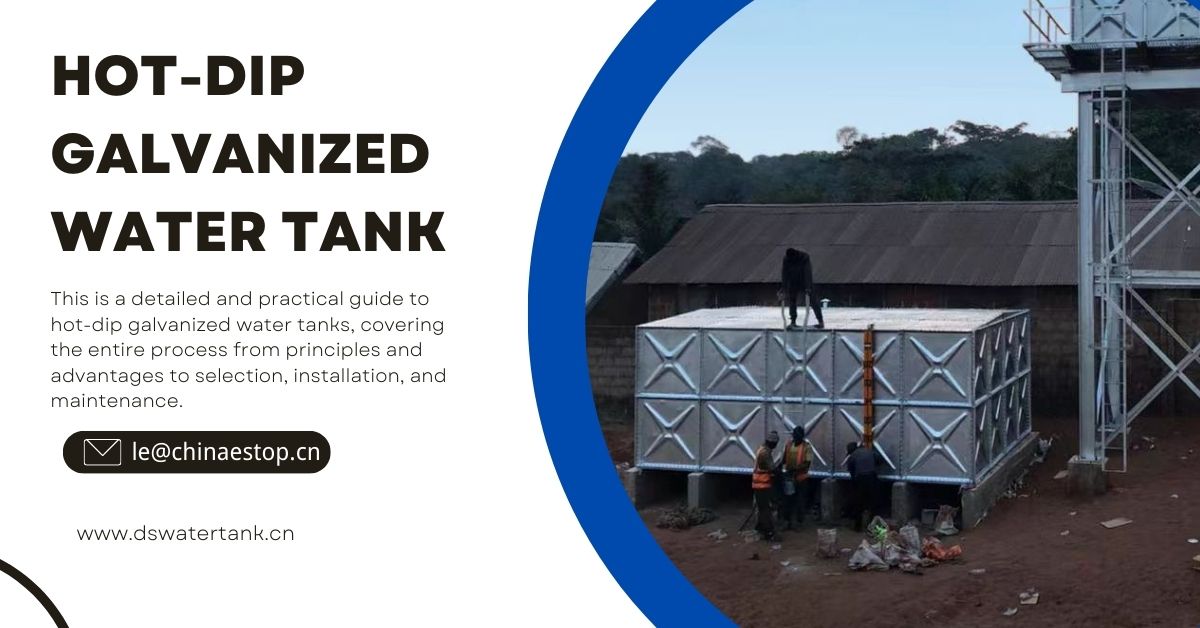
A hot-dip galvanized water tank is a water storage container made from high-quality carbon steel plates (usually Q235) that have undergone a hot-dip galvanizing process and are then assembled using bolts.
- Core Process: The steel plates are immersed in molten zinc at high temperatures, forming a strong zinc-iron alloy layer and a pure zinc layer that are metallurgically bonded to the steel substrate. This galvanized layer is crucial for the tank's rust and corrosion resistance.
- Structural Features: Standardized molded plates (1m×1m, 1m×0.5m, etc.) are connected with bolts and sealing strips, and assembled on-site. The structure is flexible, detachable, movable, and easy to expand.
II. Core Advantages and Features
- Excellent Corrosion Resistance and Durability: The hot-dip galvanized layer provides long-lasting "sacrificial anode" protection; even with minor surface scratches, the zinc will corrode first to protect the steel plate. The normal service life can reach 20-30 years or more.
- High Strength and Pressure Resistance: The steel plate material has high strength, and with a reasonable bracing structure design, it can withstand high water pressure, making it suitable for high-rise water supply.
- Hygienic and Safe: The galvanized layer is stable and non-toxic, meeting standards for drinking water storage (note the "white rust" or zinc ion precipitation issues during initial use, explained later).
- Convenient and Flexible Installation: Modular design eliminates the need for large lifting equipment, allowing for fast on-site assembly and requiring minimal installation space. Easy to disassemble, relocate, or expand.
- High Cost-Effectiveness: Lower initial investment compared to stainless steel tanks; faster installation, no leakage, and lighter weight compared to concrete tanks; more robust and stable material with no aging or leaching risks compared to fiberglass tanks.
- Simple Maintenance: Easy internal cleaning, and individual panels can be replaced if damaged.
III. Main Application Scenarios
- Firefighting water storage systems in civil and industrial buildings (the most common and economical choice for fire water tanks).
- Domestic water storage in towns, villages, and institutions.
- Production water storage tanks for industrial and mining enterprises. • Circulating water and make-up water tanks for HVAC systems.
- As supporting water storage devices for reclaimed water treatment and water treatment equipment.
IV. How to Choose a Hot-Dip Galvanized Water Tank? (Selection Key Points)
1.Material and Galvanized Layer:
- Steel Plate Thickness: Determined by the height (water depth) of the water tank. Typically, the side panels use different thicknesses from bottom to top, such as 2.0mm, 2.5mm, 3.0mm, etc., with the bottom and top plates being thicker. Be sure to ask the manufacturer for detailed plate thickness specifications.
- Galvanized Layer Weight: The national standard requires no less than 500g/㎡ (double-sided). This is a key indicator of corrosion resistance; it is recommended to request a material report.
2.Structure and Bracing:
- The interior must have multiple bracing structures (horizontal bracing, vertical bracing, diagonal bracing, etc.) to ensure that it does not deform under pressure. Poorly designed water tanks can bulge or even burst.
- Check the bolt material (usually hot-dip galvanized bolts) and the material of the sealing strips (food-grade EPDM rubber is preferred).
3.Size and Volume:
- Calculate the volume based on actual water consumption needs, and consider fire safety regulations (such as continuous water supply time requirements for sprinkler and fire hydrant systems).
- Measure the installation location on-site (such as rooftop load-bearing capacity, access channel dimensions), and communicate with the manufacturer to determine the optimal length, width, and height ratio.
4.Accessory Selection:
- Manhole: For easy access for cleaning and maintenance, the diameter is usually ≥600mm.
- Internal and External Ladders: Essential for safe maintenance.
- Inlet, Outlet, Overflow, and Drain Ports: Reserved according to pipeline design; the location and diameter must be determined in advance.
- Level Gauge: Float type or electronic type, to monitor the water level.
- Vent Cap: To maintain air circulation and prevent negative pressure or water quality changes.
V. Installation Precautions
- Foundation Requirements: A level and sturdy concrete foundation or I-beam foundation must be constructed. The foundation plane error must be controlled, and the foundation's load-bearing capacity should be more than 1.5 times the weight of the water tank when full. 2. Installation Sequence: Base plate → Side panels (starting from the corner) → Reinforcement system → Top plate → Accessories. Strictly follow the manufacturer's instructions during installation, and ensure bolts are tightened evenly.
- Leakage Check: Ensure sealing strips are placed flat during assembly. After tightening the bolts, fill the tank with water and test for leaks for 24-48 hours, checking all joints for seepage.
- Safety Protection: Protective railings should be installed around the water tank, and special design is required if the top needs to bear weight. The lightning rod must be effectively connected.
VI. Use and Maintenance
1.Initial Use (Key Steps):
- Cleaning and Disinfection: After filling with water, a thorough cleaning is required. For drinking water, it is recommended to use a chlorine-based disinfectant (such as sodium hypochlorite) for soaking and disinfection, then drain and rinse with clean water 2-3 times.
- "White Rust" Treatment: White or gray powder (basic zinc carbonate, commonly known as "white rust") may appear on the inner wall of a new water tank. This is an oxidation product of zinc and has very low toxicity to humans, but it affects the appearance. The above cleaning and disinfection process can remove most of it.
2.Routine Maintenance:
- Regular Inspection (at least 1-2 times a year): Check the tank body for deformation and rust spots; check for loose bolts; check for aging of sealing strips; check for sediment or algae growth inside.
- Regular Cleaning: Depending on water quality, it is recommended to clean the tank every six months to one year. After draining, clean the inner wall with a soft brush to remove sludge.
- Anti-corrosion Repair: If the galvanized layer is severely damaged during transportation or installation, use a special zinc-rich coating for local repair. Do not use ordinary paint.
VII. Frequently Asked Questions and Answers
- Q: Will hot-dip galvanized water tanks rust?
◦ A: High-quality hot-dip galvanized water tanks rarely rust under normal use. Corrosion usually starts at cut edges, welding points (if not fully bolted), or where the galvanized layer is severely damaged. Regularly inspect these areas. - Q: Is it suitable for storing drinking water?
◦ A: Yes, but thorough initial cleaning and disinfection are required. When left standing for extended periods, the zinc ion content in the water may slightly increase, but it is usually far below the national drinking water standard limit (1.0 mg/L). If extremely high water quality is required, consider using a tank with an anti-corrosion coating or choosing a stainless steel water tank. - Q: How to choose between a galvanized steel water tank and a stainless steel water tank?
◦ A: Hot-dip galvanized water tanks are more cost-effective, especially suitable for fire fighting water, industrial water, and cost-sensitive domestic water projects. Stainless steel water tanks are more aesthetically pleasing, more corrosion-resistant (especially in chloride environments), and easier to clean, making them suitable for high-end hotels, hospitals, food processing plants, and other applications requiring extremely high standards of hygiene and appearance for drinking water storage. - Q: How to prevent freezing in winter?
◦ A: Water tanks installed outdoors must be insulated. Insulating materials such as rock wool or polyurethane foam can be used, covered with color steel plates or aluminum sheets for protection. Heat tracing cables can be added if necessary.
Summary and Recommendations
Hot-dip galvanized water tanks are a prime example of a durable and economical water storage solution. When choosing, please be sure to:
- Choose a reputable manufacturer and verify material certificates and galvanizing layer test reports.
- Pay attention to design and installation; unreasonable design and installation are the main causes of failures.
- Do not neglect initial cleaning and disinfection; this is crucial for water safety.
- Establish a simple regular inspection system, which can greatly extend the service life of the water tank and avoid sudden problems.
For most fire fighting and conventional domestic water supply projects, hot-dip galvanized water tanks are a reliable and wise choice.