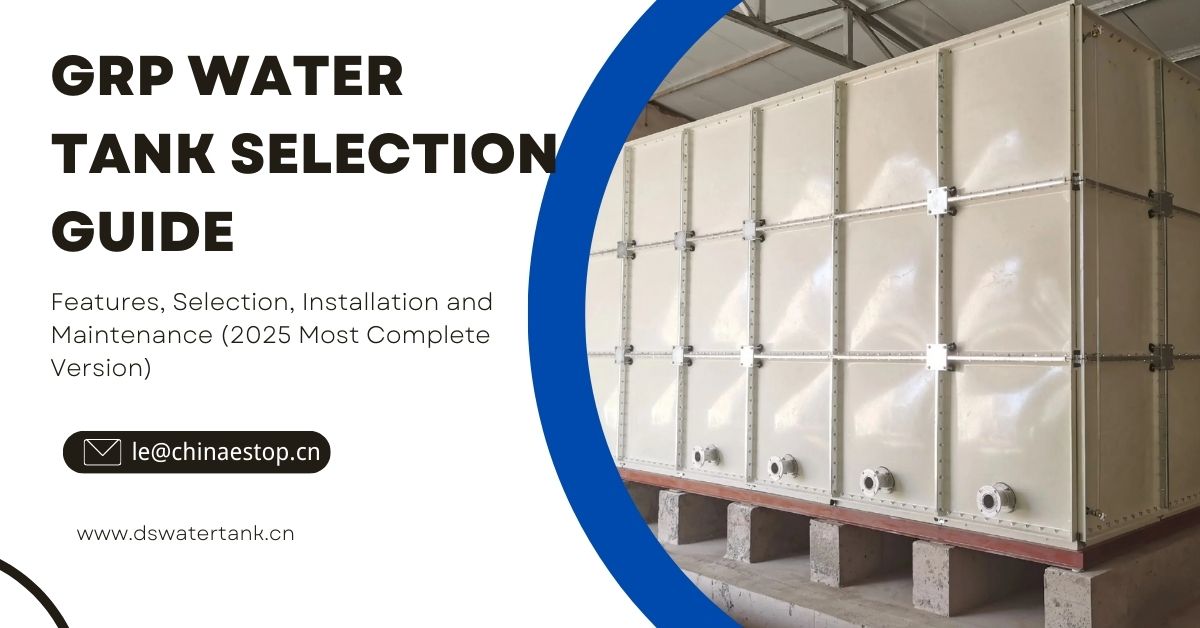

Introduction: Why are fiberglass water tanks widely used globally?
In the 21st century, engineering projects have placed new and higher demands on the durability, cost-effectiveness, construction efficiency, and environmental adaptability of materials. Fiberglass reinforced plastic (FRP/GRP) water tanks, with their unique material advantages and modular design, have become the preferred solution for building domestic water supply, fire protection, industrial water storage, and rainwater harvesting projects. This guide aims to provide engineering procurement, design institutes, consulting firms, and end-users with a directly referable authoritative resource to help you make informed decisions in bidding, design selection, and subsequent operation and maintenance.
What is a fiberglass water tank? Materials and classifications
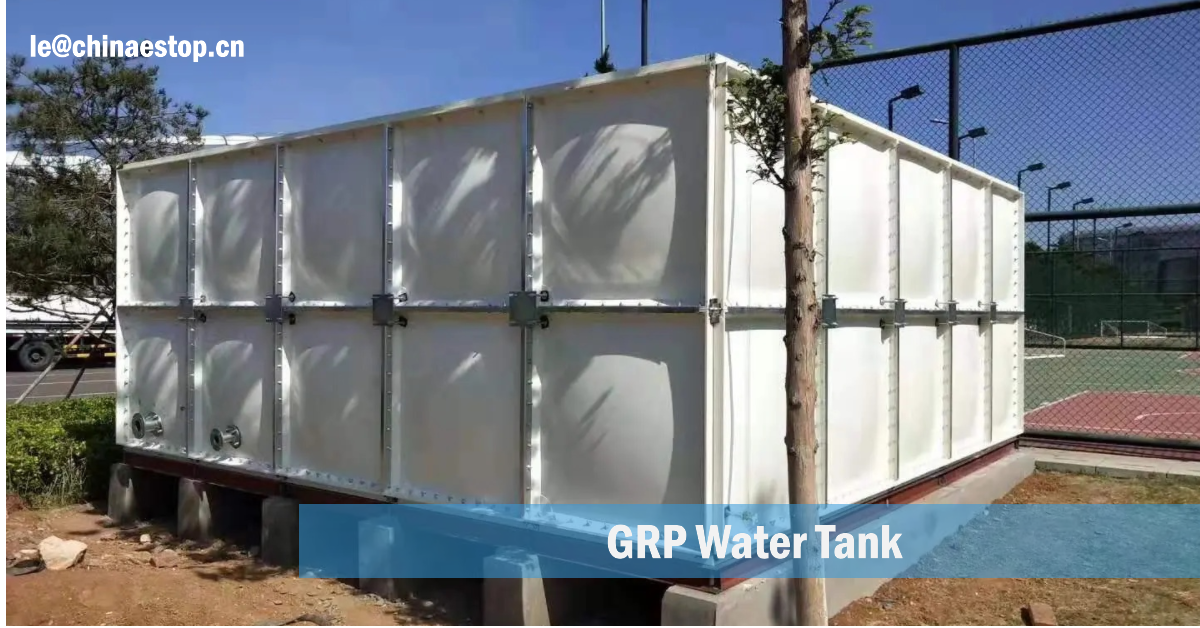
Fiberglass reinforced plastic (FRP/GRP) is an engineering material made by composite processes using glass fiber as reinforcement and polyester resin (or other resins) as the matrix. When used in the manufacture of water tanks, common processes and product forms include:
- SMC (Sheet Molding Compound) molded panel water tanks: assembled from molded standard panels, offering high precision, a smooth surface, and suitability for mass production.
- Hand lay-up/spray-up: suitable for customized or special-shaped water tanks, but with relatively high cost and labor input.
- Integral pultrusion/winding: used for certain special storage tanks and cylindrical storage tanks, but uncommon in large-capacity modular water tanks.
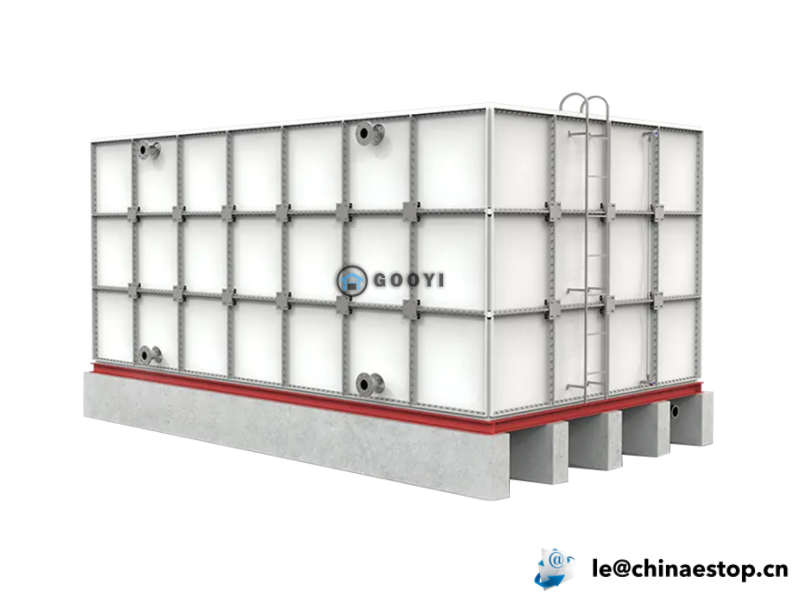
FRPGRP water tank
Core Advantages: Why Choose FRP/GRP Water Tanks? (Point-by-Point Analysis)
When selecting water storage equipment, contractors typically weigh factors such as cost, lifespan, ease of installation, and maintenance. FRP water tanks offer the following significant advantages over traditional concrete and carbon steel water tanks:
1.Lightweight and high strength
FRP materials have a much lower density than steel and concrete, resulting in lower transportation and hoisting costs, making them particularly suitable for rooftop installations or sites with load-bearing limitations.
2.Strong corrosion resistance and chemical resistance
The chemical inertness of the resin matrix gives FRP excellent resistance to acids, alkalis, seawater and a variety of chemical media, making it suitable for corrosive environments such as water plants and chemical plants.
3.Hygiene and safety (suitable for drinking water)
Made with food-grade resin and a smooth inner lining, it meets drinking water storage standards and avoids secondary pollution.
4.Modular and factory-produced, enabling rapid on-site installation.
Standardized molded panels facilitate transportation, reduce on-site construction time, shorten the construction period, and reduce labor costs.
Structural composition and specifications (including technical parameter table)
The table below provides a reference for the technical parameters of common modular FRP water tanks (for preliminary estimation during the design phase only). For formal projects, the structural drawings and calculations provided by the supplier shall prevail.
| project | Reference value / Explanation |
| Common panel block sizes | 1000×1000 mm / 1000×500 mm / 500×500 mm/1500x1000 |
| Plate thickness | 5 mm – 22 mm (adjustable depending on water pressure, height, and application) |
| Unit capacity | 1.0 m³ – 2000.0 m³ (depending on the combination of tectonic plates) |
| Design pressure | Atmospheric pressure water tank; reinforced design for locally pressure-bearing parts. |
| Applicable temperature | -20°C – +60°C (High-temperature resistant formulas can reach 80–90°C) |
| life | 20-30 years (with proper use and maintenance) |
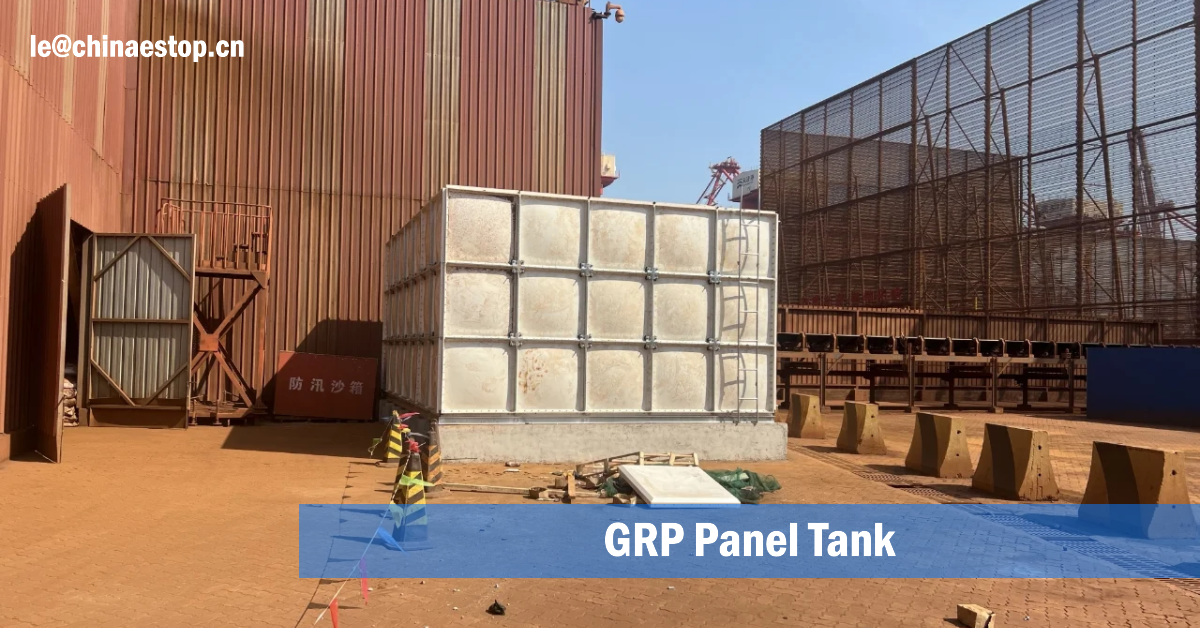
Detailed Explanation of Manufacturing Processes: Comparison of SMC High-Temperature High-Pressure Molding and Hand Lay-Up Processes
The manufacturing process directly determines the performance, cost, and appearance of a water tank. Below is a comparison of two common manufacturing processes:
SMC molding process
- Advantages: High dimensional accuracy, smooth surface, suitable for mass production, and good consistency.
- Disadvantages: Higher mold cost, suitable for bulk orders or standardized products.
Hand lay-up process
- Advantages: Suitable for non-standard shapes and small-batch customization; low mold investment.
- Disadvantages: Highly dependent on worker skills; significant variations in surface quality and consistency.
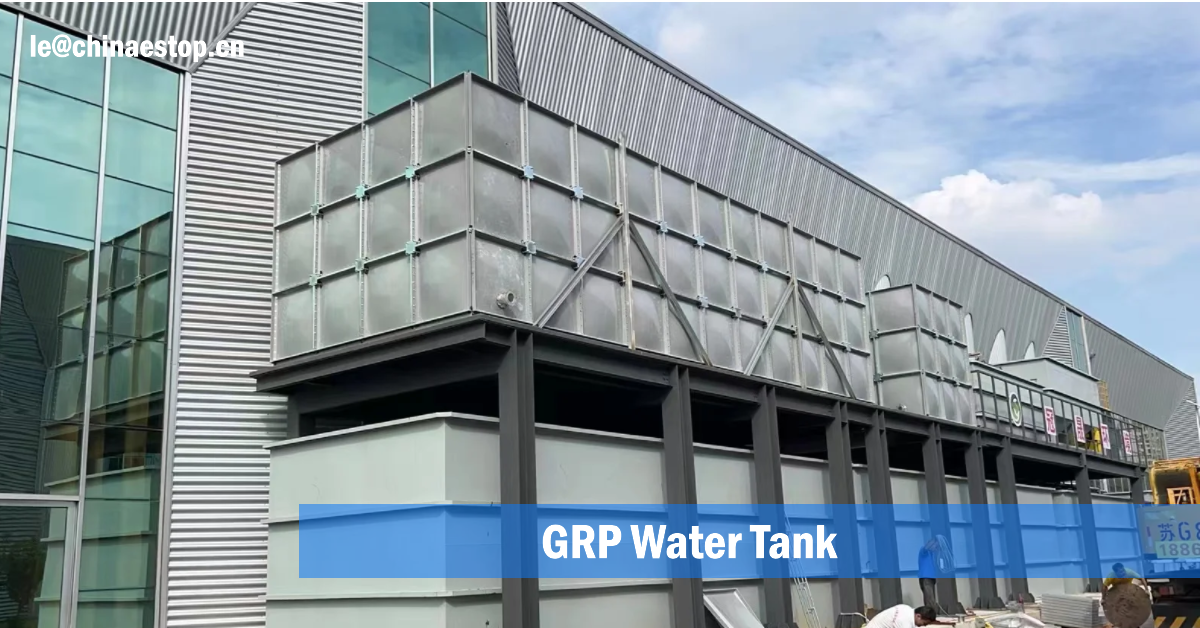
Installation process: (Basic → Assembly → Water test)
Proper installation is crucial to the lifespan and safety of the water tank. The following are the key points for step-by-step installation:
- Foundation Preparation: For load-bearing foundations, use a C10-C20 concrete leveling layer to maintain horizontality. If necessary, construct a moisture-proof layer and drainage slope.
- Metal Supports: For roof or ground supports, calculate the load and use hot-dip galvanized steel or stainless steel supports.
- Base Plate Assembly: Install the base plate first, ensuring it is level. Tighten the gaskets and bolts to the specified torque.
- Side Plates and Tie Rods: Install the side plates one by one and add internal tie rods to ensure overall rigidity.
- Top Cover Installation: After the top plate is installed, check that the overflow port, inspection port, and vent are properly sealed.
- Pipelines and Fittings: Install inlet/outlet, overflow, sewage, and sensor interfaces, using qualified flanges and sealing materials.
- Water Injection Test: Conduct a 24-hour water injection test, observing for leaks at the joints. If necessary, perform localized reinforcement.
Selection Guide: How to Choose the Right Water Tank for Your Project (Detailed Steps and Calculations)
Selection typically begins with a needs analysis: number of users, water type (domestic/fire protection/industrial), backup water volume, installation location, and budget constraints.
Step 1 — Calculate water consumption and capacity
For example, if a residential building requires a 24-hour water supply for daily use, the amount should be calculated based on the daily water consumption per person, with a safety margin included.
Step 2 — Determine the installation location and load-bearing capacity
Roof installation requires calculation of the floor structure's load-bearing capacity and communication with the structural design unit, and the adoption of vibration reduction and reinforcement measures when necessary.
Step 3 — Determine the materials and accessories (food grade / UV resistant / insulation / accessory materials)
For drinking water applications, food-grade resin and stainless steel internal components are recommended; for outdoor applications, UV resistance and color stability should be considered.
Inspection, quality assurance, and standards compliance (key points for project delivery)
Before project delivery, the following inspections are mandatory:
Visual Inspection: The panel surface must be intact, free from cracks, bubbles, and obvious defects.
Thickness Testing: Key areas must be randomly inspected using a non-destructive thickness gauge.
Sealing Test: A 24-hour water injection or pressure test.
Material Certification: Resin and fiberglass testing reports.
Hygiene Testing: If intended for drinking water use, a water contact material testing report is required.
Maintenance and Troubleshooting (Practical Guide)
Regular maintenance can significantly extend the life of the water tank. Recommended cycle:
- Monthly: Visual inspection (cracks, leaks, bracket corrosion)
- Quarterly: Clean inlet and outlet, inspect gaskets
- Annually: Comprehensive internal cleaning and disinfection, check bracing and bolt tightness
Common problems and solutions
- Water seepage: Check if the joint sealant is aging; replace the sealant and retighten the bolts if necessary.
- Odor or algae: Perform internal cleaning and disinfection; check if the vents are blocked, causing water stagnation.
- Structural deformation: This may be due to uneven support or overloading; immediate structural reinforcement and professional assessment are required.
Application Scenarios
FRP water tanks are suitable for:
- Domestic water supply for residential communities and commercial complexes
- Industrial water and process cooling water storage
- Fire water tanks (with automatic sprinkler systems)
- Rainwater harvesting and greywater reuse systems
- Corrosion-resistant water storage for seaside resorts and salt spray environments
Frequently Asked Questions (FAQ)
Can fiberglass water tanks be used to store drinking water?
Yes. A food-grade resin and a lining that meets drinking water contact material requirements are required.
What is the lifespan of a fiberglass water tank?
Under normal use and maintenance, it lasts 20–30 years. The actual lifespan is affected by the environment (ultraviolet radiation, sea breeze), frequency of use, and maintenance conditions.
How to clean and disinfect?
The common method is to drain the water and rinse it with clean water. If necessary, use an approved disinfectant to disinfect the inner wall, then rinse it thoroughly with clean water and test the water quality.
Contact Us / Get a Custom Quote
For CAD details, product manuals, or engineering consultation, please contact us via:
Email: le@chinaestop.cn
Tel: +86-158-3363-2335