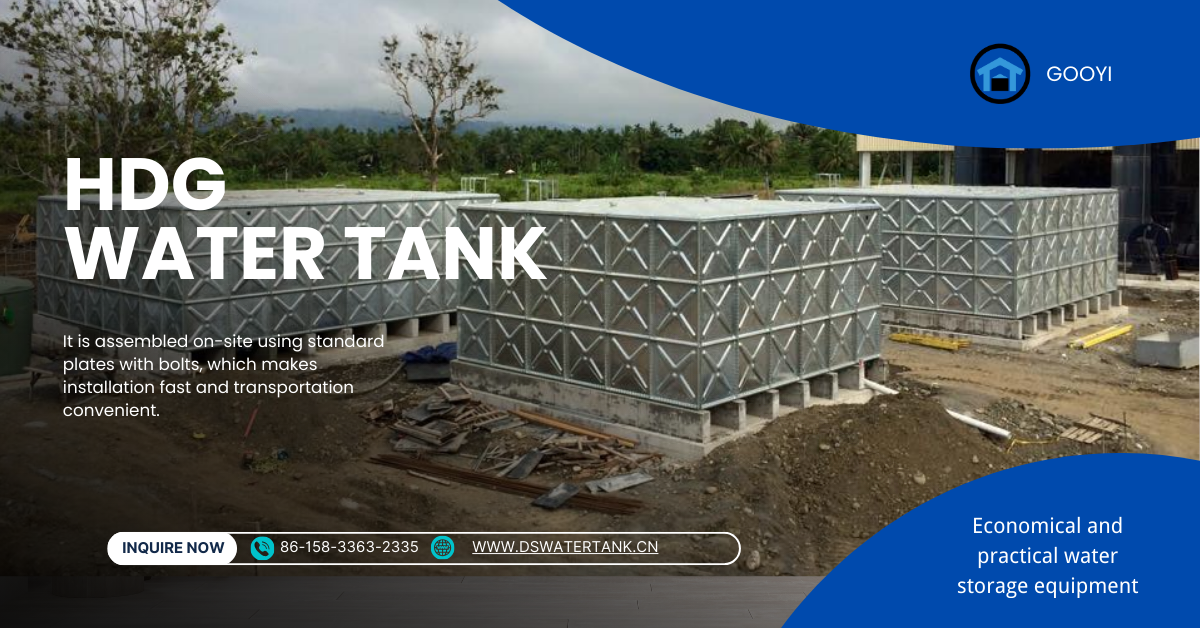

HDG water tanks are primarily suitable for non-potable water storage scenarios where cost is sensitive and water quality requirements are not high.
The following details their specific applicable fields, advantages and disadvantages, and important precautions.
I. Main Applicable Fields
- Firefighting Water Systems
◦ This is the most core and common application. Firefighting water tanks do not have high hygiene requirements for water quality, but require a robust structure, corrosion resistance, and long service life. Hot-dip galvanized steel plates can well meet these requirements, and the cost is far lower than stainless steel water tanks.
- Temporary Water Use at Construction Sites
◦ Used for dust suppression, washing, and concrete curing during construction. Since these are temporary facilities, cost is a key consideration, and hot-dip galvanized water tanks are an economical choice.
- Agricultural Irrigation and Aquaculture
◦ Used to store irrigation water, fishponds, pastures, etc. These applications do not have high drinking water quality requirements, making hot-dip galvanized water tanks perfectly suitable.
- Industrial Cooling Circulating Water
◦ Used as a supporting water storage tank for cooling towers in factories to store circulating cooling water. Chemicals are often added to the water, which can corrode ordinary steel, but the hot-dip galvanized layer provides effective protection.
- Air Conditioning System Water Storage
◦ Used for storing cooling water or chilled water in central air conditioning systems.
- Other Non-Potential Water Storage
◦ Such as for green space irrigation, toilet flushing, fire drills, etc.
II. Advantages of Hot-Dip Galvanized Water Tanks
- Low Cost: Compared to stainless steel water tanks, the initial investment cost is much lower, offering high cost-effectiveness.
- High Strength and Durability: Steel itself has high structural strength, allowing for the manufacture of large-capacity water tanks. The hot-dip galvanized layer provides excellent corrosion resistance and a long service life.
- Easy Installation: Typically assembled on-site using standard panels bolted together, installation is fast and transportation is convenient.
III. Important Limitations and Inapplicable Areas
Most importantly: Hot-dip galvanized water tanks are generally not suitable for long-term storage of drinking water (direct drinking water, cooking water).
The reasons are as follows:
- Zinc layer dissolution risk: After prolonged immersion, trace minerals and acids/alkalis in the water may slowly react with the zinc layer, causing zinc ions to dissolve into the water. Although zinc is an essential trace element for the human body, excessive intake can cause poisoning (such as nausea, vomiting, and abdominal pain).
- Hygiene hazards: After years of use, the galvanized layer may partially peel off or rust due to water quality or mechanical damage. Rust products can pollute the water and breed bacteria.
- National standard restrictions: In China, the "Standards for Drinking Water Quality" (GB 5749) has strict regulations for water distribution equipment to ensure that materials do not release harmful substances into the water. Hot-dip galvanized steel is generally not recommended for internal water storage in direct contact with drinking water.
Summary: Hot-dip galvanized water tanks are an economical and practical water storage device, perfectly suited for non-potable water applications such as fire fighting, construction, agricultural irrigation, and industrial circulating water. However, due to the potential risk of water pollution, it is absolutely not recommended as a drinking water storage device for homes, hotels, schools, hospitals, or similar locations. When choosing a device, it is essential to make the right decision based on the final use of the water.